London Retail (43% weighting)
Governance Report High‑frequency missions, dense catchments, deep demand and tight supply
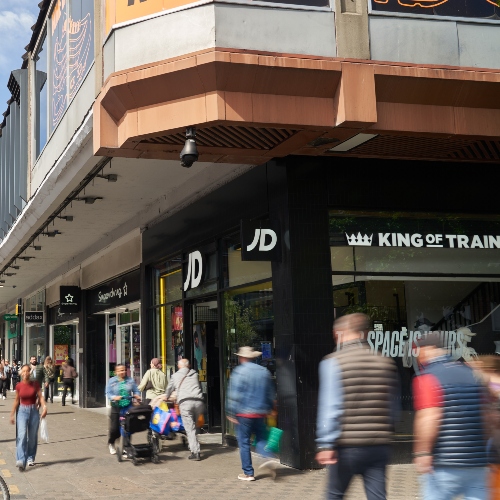
London Retail is one of our strongest convictions for rental and capital growth. The rationale is structural: dense and growing catchments, constrained new supply, strong transport connectivity and a broad occupier base spanning essential retail, services, leisure and value‑led operators. Hybrid working has reinforced localised demand in many London catchments, increasing the value of strong ‘close‑to‑home’ retail destinations.
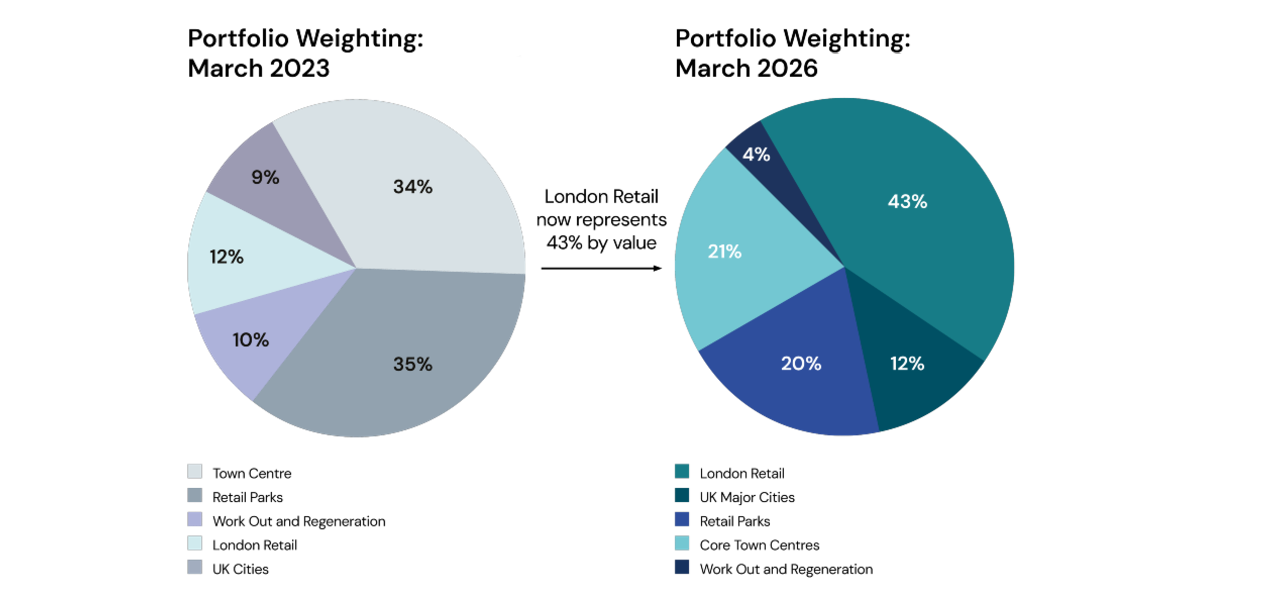
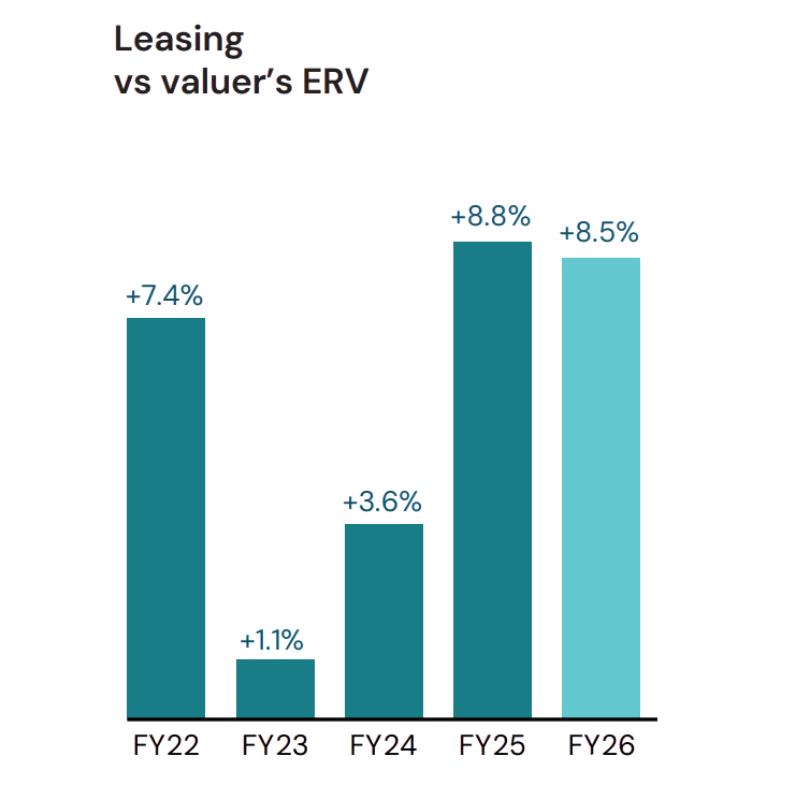
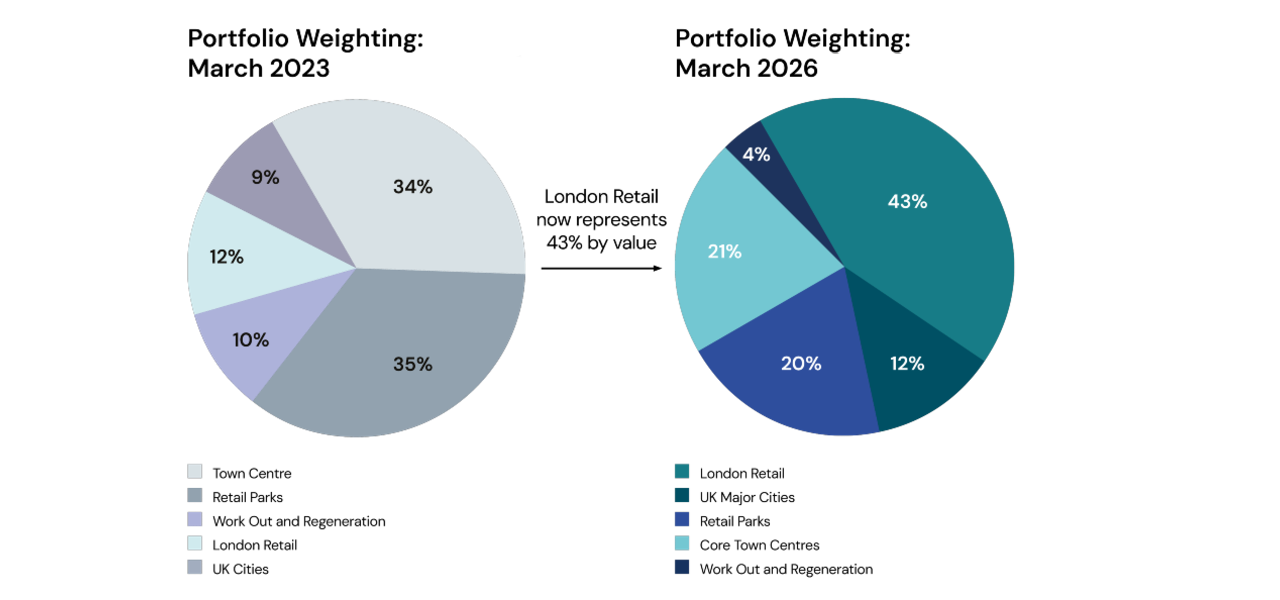
C&R was a deliberate step to scale this exposure. London Retail now represents 43% of balance sheet assets. Performance in FY26 has been strong: long‑term leasing at +12.8% vs ERV and +31.8% above previous passing rent, alongside capital value growth of +2.0% over the year.
Our focus is to maintain leasing momentum, deliver sustainable rental growth, and actively shape space to match demand. Where occupier cost pressures are rising, the objective is durable rents rather than headline rents that do not endure. London also benefits from superior alternative use optionality, which underpins values through the cycle.
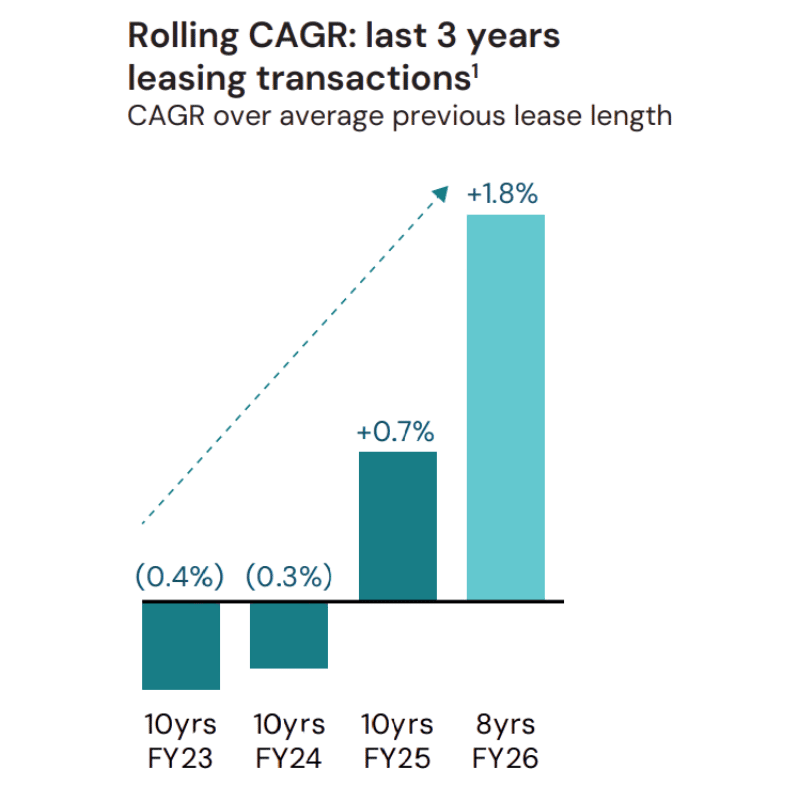
The leasing evidence supports our conviction that these assets can deliver consistent, compounding rental growth over time.
UK Major Cities (12% weighting)
Regional hubs with consolidated demand
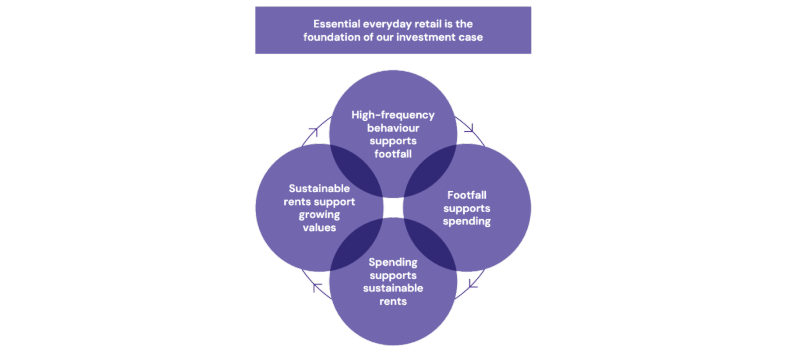
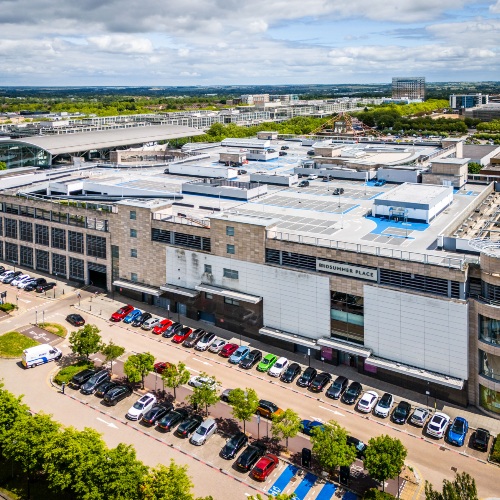
UK Major Cities share the characteristics that matter: large and growing catchments, strong everyday consumer demand, and an affordability profile that supports a wide spectrum of occupiers. The fundamentals are consistent with our thesis: frequency, affordability and constrained supply in key locations.
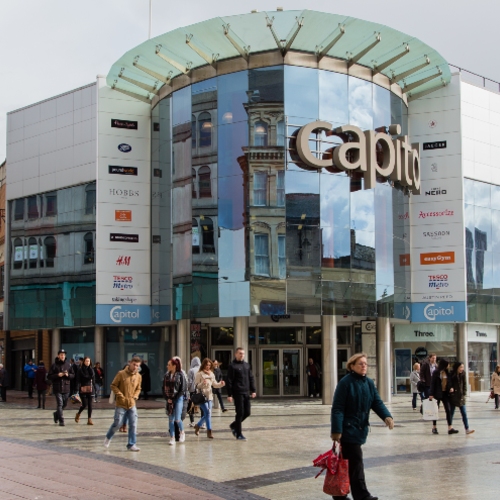
Leasing totalled 186,900 sq ft, with long‑term transactions securing £1.5 million of annual rent at +8.5% ahead of ERV and a CAGR of +2.7% against previous passing rent over an average prior lease term of 6.2 years. The most significant development was the agreement for lease with Gravity, the experiential leisure operator, covering c.80,000 sq ft at the Capitol Centre in Cardiff. That transaction repositions a significant portion of the asset toward experience‑led use, diversifying the income base and strengthening footfall.
Our focus is to reinforce high‑footfall, increase dwell time, and diversify income through an appropriate blend of value retail, services, and experience‑led uses. The objective is consistent rental growth over time, delivered through active management rather than reliance on the market.
Retail Parks (20% weighting)
Omni‑channel compatible, scarce supply and clear rental growth
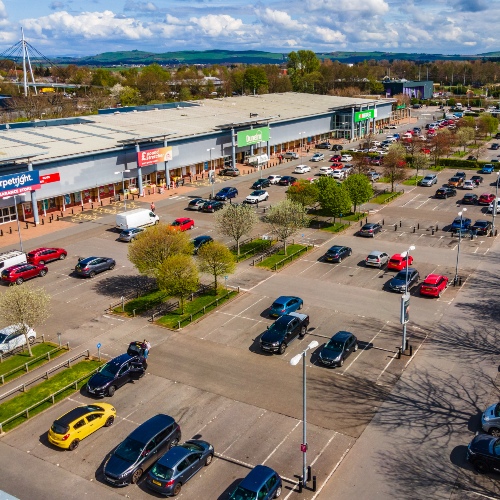
Retail Parks are among the most attractive formats in UK real estate right now. Structurally low vacancy, limited new supply, strong national occupiers with healthy balance sheets, and a format that is purpose‑built for omnichannel retail. Occupier demand remains concentrated in the best locations, and there is little new supply to absorb it.
The leasing numbers reflect that. In FY26, we secured 22 deals delivering £1.9 million of annual rent across 185,000 sq ft, with longterm leasing at +7.0% to ERV and +63.8% above previous passing rent, on a WALE of 12.5 years. That reversion uplift is among the strongest across the portfolio.
Our focus is to maintain high occupancy, extend lease terms, and continue to capture the rental growth supported by supply‑demand dynamics. Where capital allocation can enhance income quality, we will deploy it selectively.
Core Town Centres (21% weighting)
Pragmatic management and selective recycling
Town centres show a wider dispersion of outcomes than any other segment. The best locations, with strong anchors, dense catchments and active management, continue to consolidate demand and deliver leasing growth. Others face structural challenges that no amount of active management completely resolves.
In FY26, leasing held up well despite retailer restructurings, particularly in the first half of the year, with transactions completing at +5.5% to ERV and +24.8% above previous passing rent. That resilience reflects the quality of the assets we have retained in this segment. Town Centres represent 21% of the balance sheet, with different assets at different points in their income growth trajectory.
Our approach is pragmatic: maintain leasing momentum in the strongest assets, keep affordability under review, reshape space where demand has changed, and recycle capital where the path to compounding is narrow.
Work Out and Regeneration (4% weighting)
Reducing exposure and crystallising value
Work Out and Regeneration together represent 4% of the balance sheet. The heavy lifting on portfolio repositioning is largely done.
Work Out is down to 1%. The Capitol Centre in Cardiff has been repositioned and transferred into the Core segment. The remaining exposure is being managed through the disposal programme.
Regeneration stands at 3%. At Burgess Hill, the residential site sale is advancing following a conditional joint venture agreement with Mid Sussex District Council.
The priority is straightforward: reduce risk, crystallise value and recycle capital into assets where it compounds.
Valuation and liquidity – preserving flexibility and improving per‑share outcomes
Valuation is ultimately a function of income, growth expectations and the cost of capital. We report valuation movements, yields and ERV trends in full within the Portfolio Review. The key point is that portfolio positioning and leasing outcomes are the clearest leading indicators of valuation resilience and, over time, valuation growth.
The portfolio was valued at £802.2 million as at 31 March 2026, with the year‑on‑year movement reflecting disposals of £110 million and a like‑for‑like revaluation increase of +0.7%. ERV growth of +1.5% and stable yields drove the uplift. Values increased +0.5% in the second half, the third consecutive period of growth.
We have remained disciplined on capital allocation. Disposals were made at book value, with the proceeds used to support a share buyback and reduce LTV. Post year‑end, the refinancing was completed on improved terms, restoring a fully unsecured debt structure, extending maturities, and strengthening liquidity, with an undrawn revolving credit facility of £120 million and cash of £116 million.
Capital allocation and risk discipline – aligned to shareholders and responsive to opportunity
We think about capital allocation as a means to an end: compounding value per share. That requires discipline, because in real estate, there is always a reason to do more, and not all activity creates value. Our approach is to direct capital to the highest risk‑adjusted return available at the time, whether that is reinvestment, further deleveraging, or share buybacks when the share price trades at a material discount to intrinsic value.
Balance sheet flexibility is what makes that optionality real and enables us to act decisively. That is why we focus on liquidity, covenant headroom and a well‑managed maturity profile. It is also why the refinancing matters: it removes a constraint and replaces it with optionality.
The next three years involve absorbing higher finance costs as we refinance our debt book. Rental growth is expected to be the primary driver of dividend per‑share growth over that period. Given that our payout ratio is among the lowest in the sector, we also have flexibility in our dividend policy to support per‑share dividend growth and to smooth the refinancing transition while maintaining our REIT obligations. A yield of almost 9% covered 125% at current prices is a well‑protected income stream with visible upside and scope for a higher payout ratio to smooth the anticipated increasing finance costs.
Investors should also expect realism about risk. Retail is operational and real estate is cyclical. We focus on high‑frequency locations with broad occupier demand, keep rents within what occupiers can sustain, and preserve financial flexibility so decisions remain chosen rather than forced.
If the market backdrop softens, our priorities are to protect income, control voids, and recycle capital into the strongest opportunities. If conditions improve, we will deploy capital where returns justify it. In both cases, the objective remains the same: compounding value per share over time.
Where our shares trade at an unwarranted discount, we will consider buybacks and further capital recycling while preserving the flexibility to invest when opportunities are mispriced in our favour.
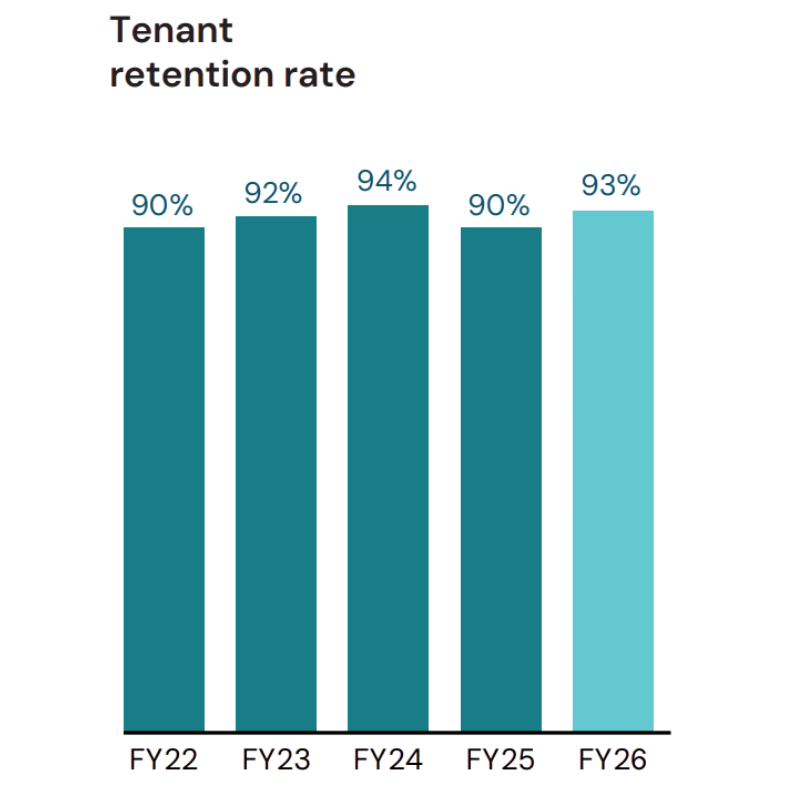
Finally, credibility is earned through evidence. We remain focused on repeatable operating metrics: leasing, affordability, occupancy and retention. We are committed to communicating clearly what we are doing, why we are doing it, and how success will be measured.
Delivering compounding returns
Our focus is on compounding value per share over time. We measure this through total accounting return, which is NAV growth plus dividends as a percentage of opening NAV, because it captures both the income we generate and the value we create.
The foundations are in place. The dividend is well covered. Occupancy is high. Leasing momentum is building, with rents agreed materially above previous passing rent on long lease terms across every segment of the portfolio. The refinancing headwind over the next 3 years is real but quantifiable, and rental growth is the mechanism to absorb it. As reversion is captured and flows through the rent roll and the finance cost step‑up is absorbed, we expect that the earnings trajectory will naturally improve.
Therefore, the prospects for delivering a total accounting return of 9‑11% per annum through to FY29, are genuinely good. We already benefit from our dividend per share being a significant component of our total accounting return, and with better prospects for both income and capital growth we are confident in delivering attractive total accounting returns.
This is not guidance. It is a framework grounded in the leasing evidence, balance sheet position and platform economics we have today. We will update it annually and communicate clearly if conditions change.
What to expect from NewRiver
Governance Report Our strategy is intentionally simple: concentrate our capital and management time on Essential Everyday Destinations in high‑frequency catchments that compound value over time through consistent rental growth.
The leasing performance in FY26 gives us confidence in our strategy. Rents agreed today at significant uplifts above passing rent, on long lease terms, will flow into reported like‑for‑like income growth as the rent roll turns. Higher finance costs as the debt book refinances over the next 3 years are a known headwind. Rental growth is the answer to it. The platform is designed to deliver that, and the leasing data tells us it is building.
We will continue to allocate capital in a disciplined manner, focusing on areas where growth is most visible and repeatable, while maintaining balance sheet strength and operational flexibility, and continue to act in shareholders’ interests, grounded in evidence, financial discipline, and long‑term value creation.
As we do so, shareholders remain supported throughout by a well‑covered dividend, a portfolio at a material discount to its growing NAV, and a management team focused on delivering on the drivers within our control.
We said we would integrate C&R, deliver the synergies, and maintain operational momentum. We have done that.
The next chapter is growth, and we are focused on delivering it.