About Us
Our Portfolio
Investors
ESG
Media



New River REIT chief executive Allan Lockhart tells Andy Hillier why its portfolio of in-town shopping centres is thriving in the retail sector.
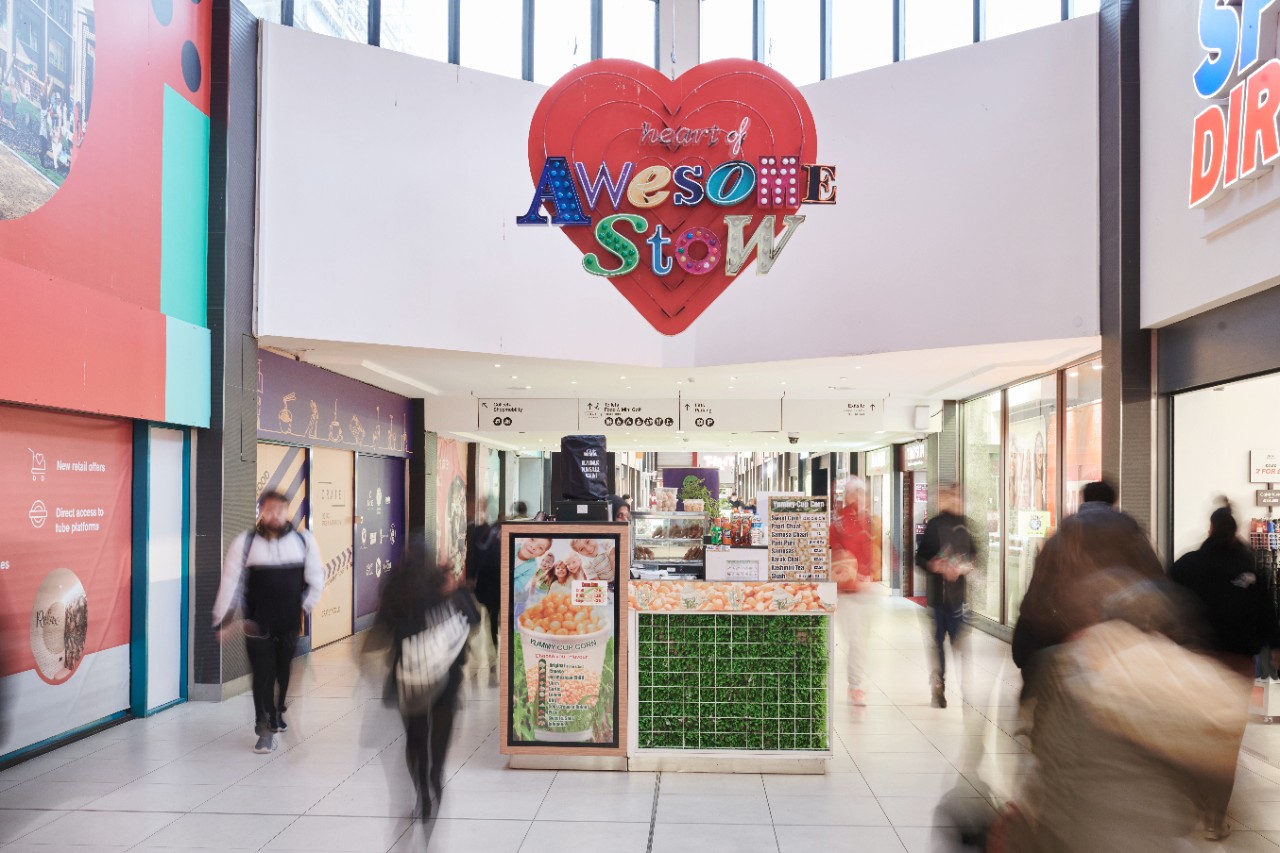
There is nothing particularly remarkable about the 17&Central shopping centre in Walthamstow, east London.
On the ground floor, there is a shopping mall where familiar high street names such as Boots and TK Maxx have taken space along with a smattering of lesser-known brands; while on the first level, there is a food and beverage area that includes a bar and a range of street-food-style outlets.
For Allan Lockhart, co-founder and chief executive of NewRiver REIT, the listed shopping centre owner and operator whose assets include 17&Central, it is this ordinariness that makes such local shopping centres a major success.
In December, the group published an impressive set of preliminary financial results for the six-month trading period to 30 September 2025. The figures show it delivered cashflow of £15.1m, a 31% increase on the same period the year before, while the firm's like-for-like portfolio valuation grew by 0.5%.
While destination shopping centres such as Westfield and Bluewater tend to attract a large share of attention in the retail space, Lockhart says it is actually local shopping centres where consumers go regularly. "They're coming here to spend their weekly budgets on food, health and beauty [products] and a whole range of things like that," he explains. "We have a very high frequency of visits but lower dwell times compared with a destination shopping centre. So, a destination shopping centre serves a different mission compared with a shopping centre like 17&Central."
But, he points out, it is about having the right local shopping centres in the right locations. In some UK towns, local shopping centres have become unsustainable as a result of an oversupply of retail space relative to local demand or a downturn in the local economy.
Centre of activity
Lockhart notes that NewRiver's shopping centres tend to be in busy areas, with around 60% of its portfolio in London. "They're in densely populated areas," he says. "Our average travel distance [for customers] to our shopping centres is less than 5km."
He adds: "At NewRiver, we feel like we've pretty much got the right ones [shopping centres] because our occupancy is nearly 96% and our tenant retention rate is about 96%."
To back up his argument about the amount consumers are spending at its centres, Lockhart cites figures from Lloyds Bank's Retail and Supermarket Benchmark. It shows that customers spent an average of 4.5% more in stores and online in the six months to 30 September. However, he says the figure for NewRiver's portfolio was 5.4%. "We are outperforming the national average," he adds.
One reason for the growth has been traditional retailers performing better in the online space by offering click & collect-style services in their stores. Lockhart says big-name brands such as Next and Marks & Spencer are now taking market share away from pure-play online retailers, with an increasing number of consumers preferring to pop into local centres to pick up items rather than pay and wait for home delivery.
But to make shopping centres work financially, Lockhart says it is important they attract occupiers from different sectors. At 17&Central, for example, there is an Asda and a Lidl in addition to the usual clothing stores, beauty retailers and coffee shops found in most shopping malls.
Lockhart describes the Asda supermarket as an "anchor tenant" that helps to drive footfall for the centre as a whole. "You have people coming in to do their food shopping, and all the other tenants benefit from that," he says. "TK Maxx is a major attraction as well."

The beauty of retail
Several well-known retailers, including Poundland, River Island and Claire's, have closed stores on the high street over the past year after struggling to make a profit. Lockhart argues that part of the "beauty of retail" from a property perspective is that it is a very dynamic market, and while some operators will inevitably scale back, there are always new ones seeking space.
He cites the example of fast-food chain KFC, which is in the process of opening a store at 17&Central. "The trend of ordering and eating at home has been growing," says Lockhart. "But it's not been out of dark kitchens; it's operating out of stores within the community in places like shopping centres."
The length of leases taken by occupiers has been steadily shortening in recent years, Lockhart concedes, but across the portfolio it remains at around six years. "We're relaxed about that," he says. "The most important thing from our perspective is: do your tenants trade well, do they make a profit and are they likely to remain in your assets? Trading performance will ultimately give you rent sustainability."
In Walthamstow, a 500-home build-to-rent (BTR) development has been constructed next to 17&Central. Lockhart points out that shopping centres often sit on strategically important land, which creates opportunities to sell off parcels of land or repurpose the existing space.
The BTR scheme, The Eades, was developed by Long Harbour with Capital & Regional. The latter was acquired by New River for £147m in December 2024. Lockhart says the scheme has been a success and the local council wants to see more residential brought forward. "We're sitting on a planning consent for around a 40,000 sq ft to 50,000 sq ft extension [of the shopping centre], with another 50 residential units to sit above the retail extension," he says. "We're working up our plans in conjunction with the council."
In December, NewRiver entered into a joint venture with Mid Sussex District Council to regenerate Martlets Shopping Centre in Burgess Hill, West Sussex. The proposed development includes 172 new homes, a 102-room hotel and 50,000 sq ft of retail space. "It is a high-quality town," says Lockhart. "It's very affluent. There is a lot of population growth and a lot of economic growth."
Under the proposals, Lockhart says the partners plan to take a "pretty awful-looking 1970s shopping centre and turn it into something in keeping with the rest of the town. "The great thing is that we don't have to invest any more capital bringing this forward, because we're going to be selling the residential site," he says. "Because we're operating with a public sector partner, it will come with grant funding, which is helpful to make the project viable."
A priority over the past year has been integrating Capital & Regional's shopping centres and retail parks into the business following the takeover. Lockhart describes the deal as a "major transaction" for NewRiver and one that has helped give the business the additional scale it needs to remain competitive in the retail space.
He says the benefits of that deal are already starting to flow through to the bottom line. "Our cash profits are up 30% in the latest half-year [figures]," he says. "It has given us increased leverage within our marketplace, particularly among tenants, and we've been able to leverage various operational synergies. It's been a fantastic transaction for us."
Good deals
As a business, Lockhart says, NewRiver is also willing to sell assets when it believes a good deal can be struck. In its current financial year, it has sold around £70m of shopping centres and has another £40m of assets under offer. "We're strong believers in recycling capital as a way to deliver earnings growth and mitigating the underlying risk within your portfolio," he says. "We never get emotionally attached to assets. If we feel we can recycle our capital through a disposal [..] and that's going to deliver a higher return and ideally a lower-risk profile, then we'll do that."
Despite owning and running a wide range of shopping centres and retail parks, NewRiver does not currently have a major destination shopping centre in its portfolio. Last year, Merry Hill shopping centre in the West Midlands was put on the market with an asking price of $250m, but Lockhart says NewRiver does not have any immediate plans to enter this part of the market.
"We've got the capability of deploying capital into destination shopping centres and we've got the experience and expertise," he says. "That said, the thing about a big destination shopping centre is the deal size. They're very large. So, we're more likely to be doing that in a partnership with a big co-investor."
He adds that given the strength of the UK retail market, he expects "more Merry Hills" to hit the market and NewRiver will look at those opportunities when they arise.
Lockhart started out in the property sector in the late 1980s, working as an agent specialising in retail. In 2001, he joined property group Halladale and oversaw its UK retail portfolio until the business was sold just before the global financial crash of 2008. "It was a great exit for the business - not that we foresaw the financial crisis," he says.
As the retail sector started to recover in 2009, Lockhart co-founded NewRiver with his father, David. The first two years of trading were "really hard", he recalls, but things became easier once it was able to access the capital markets to finance growth.
Seventeen years on, Lockhart believes the business is in the strongest position it has ever been. "There's been a lot of disruption in retail and we've not been immune to it, but we've probably coped with it way better than most people." He believes local shopping centres will continue to thrive, largely because they fulfil basic human needs. "At the end of the day, there has to be a place where people come together," says Lockhart. "Places like shopping centres in the middle of town centres are a natural convening place. That's why they're always going to have a future."